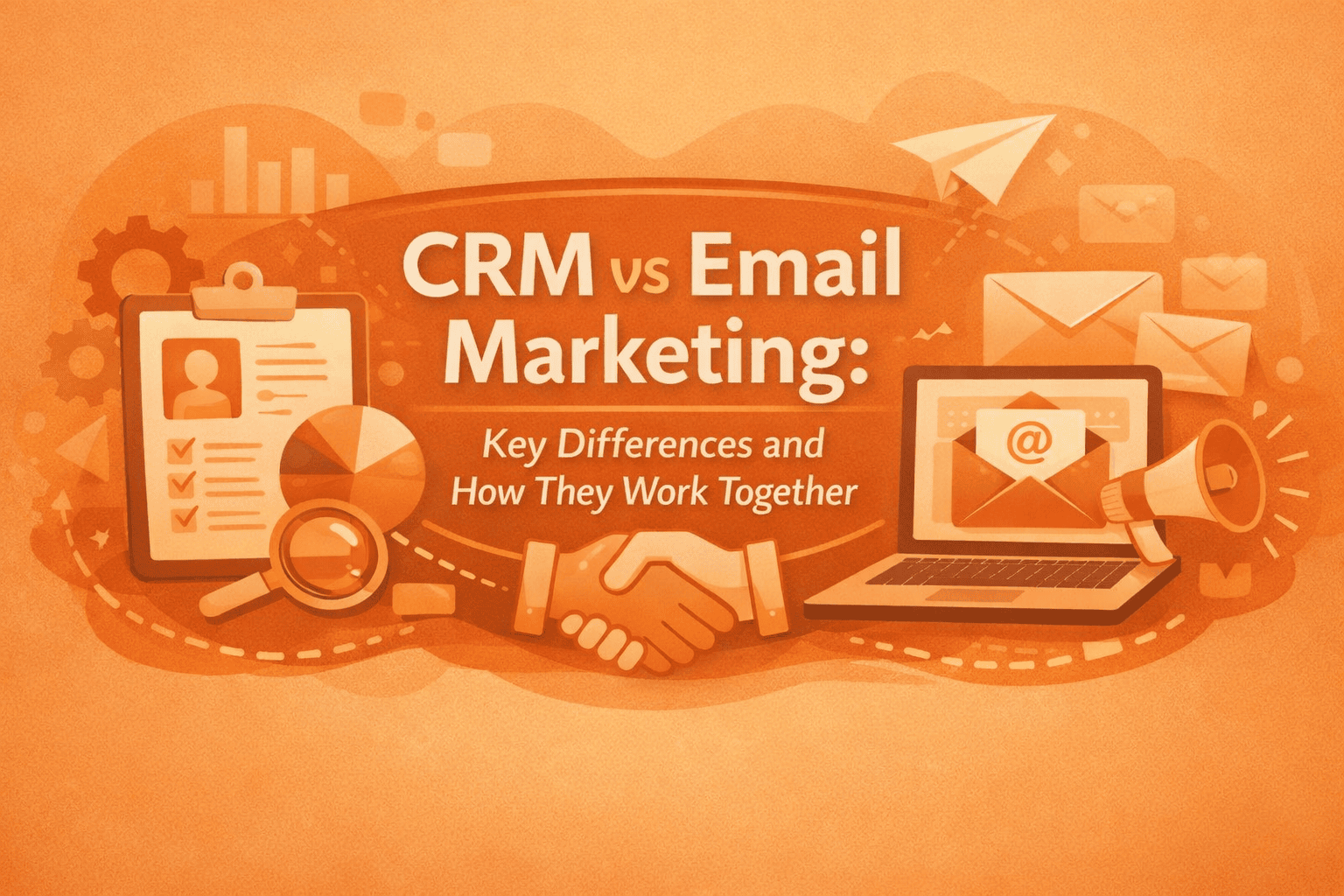
Choosing the right tools for your business can be tricky, especially when CRMs and email platforms seem to overlap. Understanding the difference between CRM and email marketing makes it easier to see what each tool does and how it supports your growth. Using them together through CRM and email marketing integration lets you connect customer data with targeted communication, creating smoother experiences and smarter workflows.
In this guide, we’ll explain both tools in simple, easy-to-understand terms, so even beginners can see why having both is a game-changer for any business.
The difference between CRM and email marketing starts with understanding what a CRM system is. A CRM helps businesses organize contacts, track interactions, and give sales and customer teams the context they need to build strong, long-term relationships.
A CRM system:
- Keep a complete history of every customer interaction so your team always knows what’s happened.
Track deals and opportunities to see which leads are most likely to convert.
- Quickly access the status of each customer or lead to prioritise follow-ups.
- Give sales and support teams the right context to personalise conversations and provide better service.
Most companies use emails in order to keep in touch with their clients and potential ones, but sending emails manually is quite time-consuming and not always reliable. Email marketing software is essential in helping you send newsletters, marketing campaigns, and auto-responder emails to numerous individuals at once. The software is also able to track responses and categorise audiences.
An email marketing software:
- Schedule emails in advance so campaigns run automatically without manual work.
- Personalise messages with names or preferences to make them feel more relevant.
Analyse which emails get the most clicks or opens to improve future campaigns.
Use automated workflows to guide leads through a series of emails over time.
It is common to classify CRM and email marketing solutions under the same category, but the reality is they have different functions. Understanding CRM vs email marketing software is an indication of how these solutions assist your business in their unique ways, either in building or maintaining the relationship or in communication.
| Feature/ Focus | CRM | Email Marketing Software |
| Purpose | Manage customer relationships and track interactions | Send emails, campaigns, and automated messages to audiences |
| Type of Data | Contact info, conversation history, deals, customer notes | Email engagement, clicks, opens, and subscriber activity |
| How Teams Use It | Sales and support teams track leads, deals, and customer interactions | Marketing teams send targeted campaigns and nurture leads |
| What Happens If You Only Use One | You might miss opportunities to reach customers effectively | You lose insight into customer relationships and context |

Opportunities lost occur when a business relies on a single tool to manage customers. The difference between CRM and email marketing emerges when leads fall through the cracks. In reality, 27% of customers report never hearing from a small business again after the initial communication, although they would welcome further communication. This indicates the importance of knowing what a CRM system is.
- Email campaigns without customer context: Messages feel generic and miss important details about each customer.
- Sales teams working blind: Without email engagement data, reps don’t know which leads are actively interested.
Leads falling through the cracks: Opportunities are lost when interactions aren’t tracked or followed up consistently.
Poor follow-ups and generic messaging: Customers receive impersonal communication, which can hurt trust and reduce conversions.
Using CRM and email marketing together fills the gaps that happen when each tool is used alone. It helps teams see customer behaviour, send relevant messages, and stay aligned—making communication smoother and more effective.
1. CRM Data Improves Email Targeting
A CRM stores customer information like purchase history, preferences, and past interactions. This data helps you send emails using email marketing software for business that feel personal and relevant, rather than generic messages that get ignored.
2. Email Engagement Feeds Back Into the CRM
When customers open, click, or respond to emails, that activity is recorded in the CRM. This is one of the key benefits of CRM vs email marketing software—you can see which leads are most engaged and prioritise follow-ups based on real behaviour.
3. Sales and Marketing Stay Aligned
Using both tools together ensures sales and marketing teams share the same insights. Everyone knows which leads need attention and what messaging works best, preventing mixed signals or duplicated efforts.
4. Customers Get More Relevant Communication
With both tools connected, customers receive messages that match their interests and stage in the journey. This makes communication feel personal, timely, and helpful rather than generic or pushy.
CRM is at its strongest as part of the email marketing process. A signup from the site automatically adds the lead to the CRM, showing exactly what a CRM system is, and the email marketing campaign builds upon it until the sale is made. After the sale, follow-ups include thanks, recommendations, or feedback, all tracked by the CRM.
Customers can also be re-engaged with targeted campaigns based on their history, and CRM and email marketing integration helps determine which messages are actually driving results.
Picking the right tools can make a big difference in how smoothly your business runs. In fact, 73% of businesses now use CRM software to manage sales and marketing efforts, showing how common and essential these tools have become. When deciding which solutions to use, consider your business size, team structure, integration needs, and budget to ensure your tools actually support your growth without adding complexity.
- Business Size and Growth Stage: Choose tools that fit your current size and future growth. Compare CRM vs email marketing software to see what works best.
- Team Structure: Consider who will use the tools and how they’ll collaborate. Knowing what a CRM system is helps.
Integration Needs: Make sure tools connect with each other and your existing apps.
Budget and Scalability: Pick solutions that fit your budget and can grow with your business.
Conclusion
Understanding the difference between CRM and email marketing helps businesses see why both tools are essential. A CRM keeps track of relationships and customer history, while email marketing software manages communication and engagement. Using them together ensures leads don’t fall through the cracks, messages stay relevant, and teams work more efficiently—helping your business grow smarter and stay connected with customers.
Set Up Your CRM And Email Marketing
To Work Seamlessly
Let us help you remove confusion and create a structure that actually works for your business.