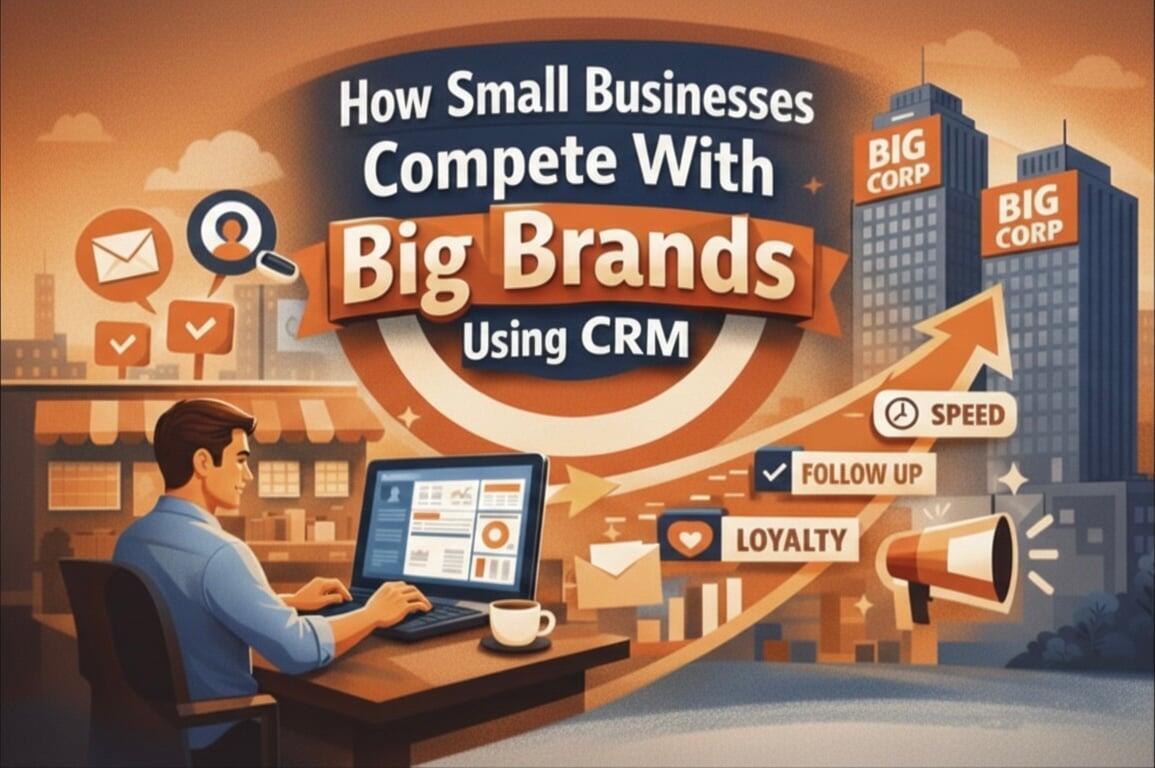
Starting a small business is like being David in the match between David and Goliath. This is because larger companies have larger manpower and budgets. Therefore, it is easy to be intimidated by the giants in the industry. Small businesses can still compete with big brands and win using the CRM tool. This is because the tool assists in the management of customers and is an effective tool in ensuring the smooth running of the business.
With the right setup, even a small team can act like a big brand, beating large competitors with CRM. In this article, you’ll learn practical ways to master follow-ups, improve consistency, respond faster, use customer data, boost retention, and build trust.
1. Small Businesses Compete with Big Brands by Mastering Follow-Up
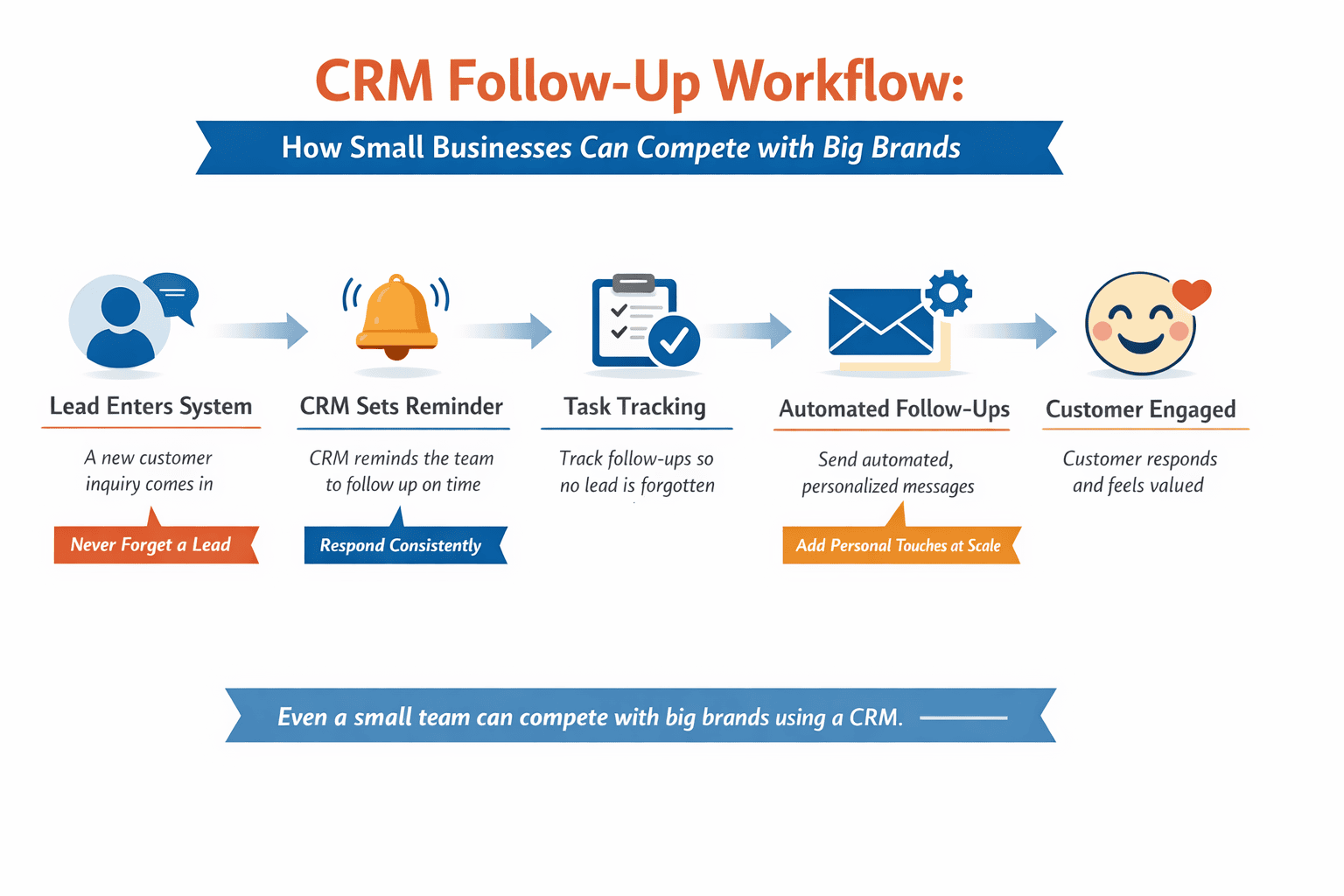
Follow-up is the backbone of keeping customers and growing sales. A lead that isn’t followed up can easily go cold, and opportunities are lost. With the right CRM, small businesses can compete with big brands using CRM by never missing a follow-up.
Reminders and task tracking make sure every lead gets attention, while automated messages let you stay consistent without extra effort. Even a small team can send personalised touches at scale, making customers feel valued and turning prospects into loyal buyers.
2. Creating Big-Brand Consistency With a Small Team
Large brands are trusted because a customer knows what to expect from them with each and every encounter they have with them. They are familiar with messages, follow-ups are on schedule, and no communication is random. CRM assists smaller teams in ensuring this as well and makes it easier to organise and beat large competitors with CRM.
With a clear CRM workflow for small teams, it becomes easier to maintain consistency in the following ways:
Templates: CRM templates help teams send email communications, messages, and follow-up communications that have the same tone and language. This helps customers feel as if they are working with an organised brand, even if the brand is just one or two people.
Task automation: Automated tasks ensure important actions like follow-ups, reminders, and check-ins happen at the right time. Instead of relying on memory, the CRM keeps work moving and helps small teams stay just as reliable as bigger companies.
Tracking customer interactions: A CRM records past conversations, purchases, and interactions in one place. This helps team members respond with context, avoid repeating questions, and give customers a smooth, connected experience every time.
3. Winning Customers With Faster Response Times
The speed offered by small businesses over large corporations is a real advantage when small businesses are competing with big brands. Consumers hate waiting, and a quick response helps establish a trusting relationship. Findings show 78% will purchase from the first response, even if it’s not the largest competitor.
With smart small business CRM strategies, you benefit from: Notifications inform you right away, while dashboards focus your attention on areas requiring action, and you can take action from anywhere, even from a different location, using your smartphone. Small business response times are always preferred over the synchronised response of bigger companies.
Quick and straightforward answers give customers visibility and build trust, increasing conversions and winning business that may otherwise go to larger-scale businesses.
4. Use Customer Data to Compete with Big Brands Using CRM
Big brands succeed, not because they’re bigger, but because they understand their customers better. With the right system in place, small businesses can compete with big brands using CRM and customer data without making it tough.
A simple CRM workflow for small teams allows you to concentrate on the right information and improve retention by as much as 27% by organising customer information:
Buying history: It is helpful to know what the customer has previously purchased, since this enables you to recommend products, follow up on the right occasion, and also consider repeat customers as familiar customers.
Customer preferences: Tracking preferences like communication style or product interest allows you to send messages that feel personal instead of generic.
Customer interactions: Recording calls, emails, and messages keeps conversations connected, so customers don’t have to repeat themselves every time they reach out.
5. Retention as a Competitive Advantage
Keeping customers is often cheaper and easier than finding new ones, yet it’s something many small businesses overlook. Focusing on retention gives small teams a real edge, letting them compete with big brands without spending a fortune.
Here’s how a CRM helps make it happen and keeps you beating large competitors with CRM:
Track repeat customers: The CRM shows who’s coming back, making it easy to spot loyal customers and prioritize them for special offers.
Follow-up reminders: Automated alerts ensure no customer is forgotten, keeping communication consistent and timely.
Loyalty programs: CRM tools make it simple to run rewards or membership programs, encouraging repeat business and building stronger relationships.
6. Building Trust Through Consistent Customer Experience
Building trust is what separates small businesses from big brands. Customers feel confident when every interaction is consistent, and even a small team can make it happen.
Take a local coffee shop, for example. They use small business CRM strategies to remember favorite orders, track visits, and send timely messages for loyalty rewards. Every message feels personal, even though only a few people run the shop. Over time, this reliability keeps customers coming back.
Consistency helps small businesses look bigger and more professional, beating large competitors with CRM one interaction at a time.
Conclusion
However, a CRM is more than just a software program. It is a tool that can allow small businesses to level the playing field with large corporations. It also helps keep track of follow-ups in a consistent manner, accelerates responses, improves the value of customer information, and fosters trust.
A good system allows a small business to compete with big brands using CRM. Organized processes are a big advantage with a CRM. With a CRM or by enhancing your system, you are able to stay on top of your customers and provide a big-company experience without a big budget.
Small companies can go head-to-head with giant brands—and a smart CRM is what makes it all possible.
Create a System That Works For Your Small Business
Let us help you with the right CRM that fits your team and helps you compete with big brands.