
Everything feels manageable at first. Leads are coming in, calls are happening, and deals are moving. Then follow-ups slip. You forget who you spoke to last week. A lead you were confident about suddenly stalls. That’s usually the moment structure becomes necessary. A sales pipeline in a CRM isn’t meant to add complexity or extra work. It brings order to what you’re already doing. In this guide, you’ll learn a simple CRM sales pipeline setup that helps you see every lead clearly and know exactly what to do next.
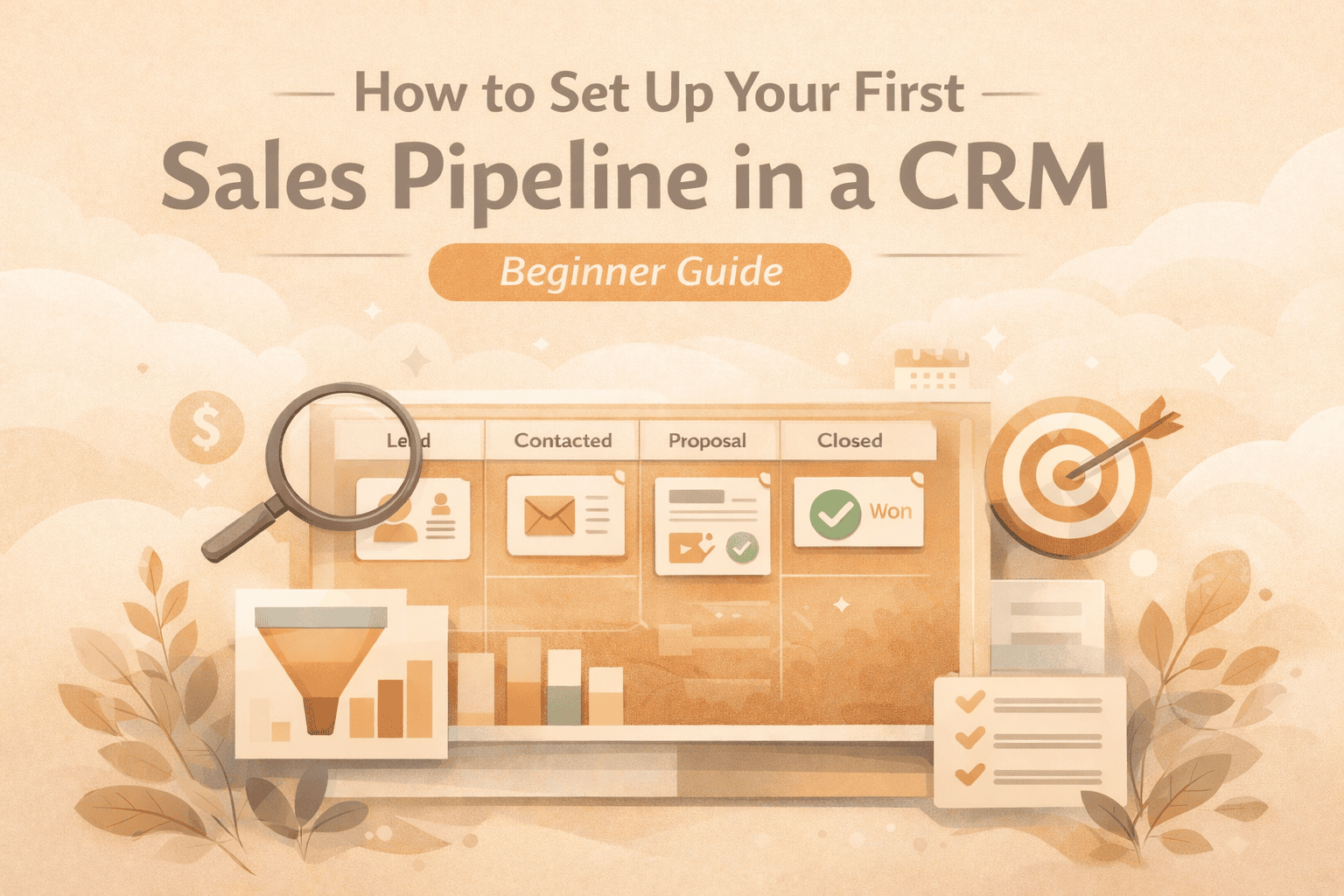
Think of a sales pipeline in a CRM like a roadmap for every potential customer. From the moment someone shows interest to the moment a deal closes, each lead moves along a clear path. These paths are broken into sales pipeline stages, like “New Lead”, “Contacted”, “Qualified”, and “Closed”. Each stage shows exactly where a lead is and what action is needed next.
It’s not just organisation for the sake of it—research shows companies that manage their pipelines effectively see about 28% higher revenue growth. A well-structured pipeline makes it easier to follow up, prioritise, and close deals consistently.
Many beginners think the key to growing sales is simply getting more leads. The truth is, the real problem often lies in not knowing where your existing leads stand. Without clarity, follow-ups slip, responses slow down, and promising deals can fall through the cracks. A proper CRM sales pipeline setup helps you see every lead’s status at a glance, prioritise your next actions, and prevent opportunities from being forgotten. Before chasing more leads, it’s smarter to get your current ones moving efficiently through a structured pipeline.
Setting up your first sales pipeline might feel intimidating, but it doesn’t have to be. With a few simple steps, you can organise your leads and see exactly what to do next.
Step 1: Choose the Right CRM for a Beginner
The first step in how to set up a sales pipeline is picking a CRM that’s simple and easy to use. Focus on clear deal visibility, not fancy features. The right CRM keeps your leads organised without feeling overwhelming.
Step 2: Define Your Sales Pipeline Stages
Before adding anything, it helps to define your sales pipeline stages so every lead has a clear place to move through.
Some stages look like this:
- A new lead is someone you’ve just added and haven’t contacted yet, so they’re at the very start of your process.
- Contacted leads are those you’ve reached out to and are waiting to hear back from.
Qualified leads show genuine interest and fit the profile of your ideal customer.
A proposal is when you’ve shared an offer, quote, or solution with the lead.
Closed deals are either successfully completed or lost, marking the end of that lead’s journey.
Start by creating a new pipeline in your CRM so all your leads have a clear home. Name each stage clearly and arrange them in the order a sale usually happens. It doesn’t have to be perfect—adjust as you go and learn what works best.
Step 3: Start Adding Deals the Right Way
When adding a deal, include the contact name, deal value, expected close date, and any important notes. Capturing these details from the start keeps your pipeline organised and helps you follow up at the right time. It also makes it easy to spot which deals need attention, so nothing gets overlooked.
Step 4: Move Deals as Conversations Progress
Move each deal through the pipeline based on real actions, not just the passage of time. A deal advances when a call is made, a meeting happens, or a proposal is sent. This keeps your pipeline accurate, helps you prioritise the right deals, and ensures nothing stalls unnoticed.

When setting up your first beginner CRM sales process, it’s normal to run into a few common challenges:
- Many beginners create too many stages, which makes tracking leads confusing and slows down follow-ups.
- Forgetting to update deals can leave your pipeline outdated and lead to missed opportunities.
- Treating the CRM like a data dump instead of a daily tool makes it hard to see what needs attention
You’ll know your sales pipeline in a CRM is effective when managing leads starts feeling easier instead of overwhelming. Teams can focus on the most promising opportunities, deals move steadily, and forecasting revenue becomes more predictable. Each of your sales pipeline stages helps you see progress at a glance, making it simpler to plan next steps.
In fact, businesses that manage their pipelines well report up to 28% higher revenue growth, showing that a clear, organised pipeline doesn’t just save time—it drives real results.
Once you’ve used your Beginner CRM sales process for a few weeks, small patterns will start to appear. This is the perfect time to make refinements—adjust stages that aren’t working, add reminders for follow-ups, or clean up old deals that are no longer active. These simple tweaks help keep your pipeline accurate, make daily use easier, and ensure your sales process grows stronger over time without adding extra stress.
Conclusion
Setting up a sales pipeline in a CRM isn’t about adding pressure or controlling every move—it’s about bringing clarity to your sales process. With a thoughtful CRM sales pipeline setup, you can see exactly where each lead stands, follow up with confidence, and focus on the deals that matter most. Once your pipeline is in place, selling feels less stressful and more intentional, making it easier to grow your business one lead at a time.
Ready to Build a Sales Pipeline
for Your Business?
Get expert support to set up a CRM sales pipeline that keeps your leads moving and your team focused.