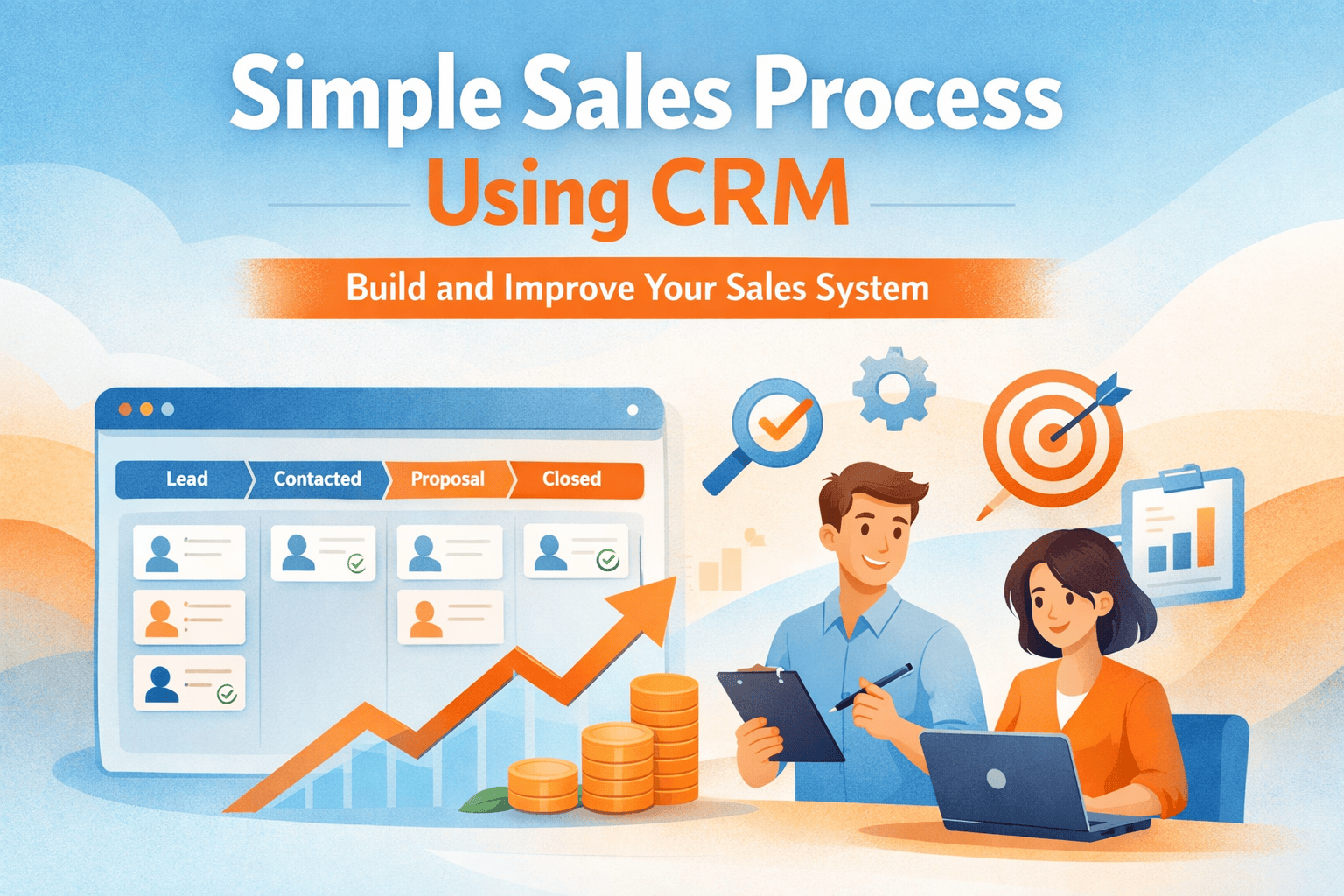
A small business owner once shared how he lost several promising customers simply because he couldn’t keep track of his conversations. Some details were in emails, others in chat messages, and a few were written down in a notebook. By the time he tried to follow up, it was already too late. This is where a simple sales process using CRM becomes important. It allows you to manage leads and deals with CRM tools in one organised system.
Let’s explore how to build a clear, practical sales process that supports steady business growth.
Over half of businesses report losing revenue simply because they don’t have a defined sales process. For small business owners, this often means missed leads, forgotten follow-ups, and wasted opportunities. Using CRM for small business sales helps organise your leads and deals, giving you a clear system to follow and making every customer interaction more consistent and reliable.
- Simple systems are easier to follow than complex ones, making your sales pipeline in CRM more effective.
- A clear process helps you consistently manage leads and deals with CRM, so nothing falls through the cracks.
Knowing the steps boosts confidence and helps you act quickly on each lead.
Selling without a plan wastes time and opportunities; a structured process keeps your focus on what matters.
A well-organised workflow makes selling easier, and this CRM sales process setup will show you exactly how to structure your leads and deals step by step.
Step 1: Map Out Your Customer Journey
List the stages your leads go through, from first contact to purchase. This is the first step in building a simple sales process using CRM.
Step 2: Set Up Your Deal Stages
Take each part of your customer journey and turn it into a clear deal stage in your CRM, such as “Contacted”, “Qualified”, or “Proposal Sent”. Defining these stages helps you track progress, spot stalled deals, and know exactly what action to take at every step.
Step 3: Organise Your Contacts and Leads
Keep all your customer information in one place. A clean CRM lets you easily manage leads and deals with CRM without losing track of details.
Step 4: Automate Follow-Ups and Tasks
Set reminders and automated messages in your CRM so no lead is forgotten. This keeps your sales consistent and frees you to focus on closing deals.
Step 5: Track, Review, and Improve Deals
Regularly check your CRM to see how deals are moving through your pipeline. Tracking performance helps you spot bottlenecks, adjust your approach, and make your simple sales process using CRM more effective over time.

Businesses that use a CRM are 86% more likely to exceed their sales goals than those that don’t. Using CRM for small business sales helps you keep your pipeline updated, review performance, and make improvements that actually boost results.
- Regularly check your sales pipeline in CRM to spot stalled deals.
- Adjust your deal stages when needed. If some stages aren’t working or are confusing, update them to better reflect your customer journey.
Train your team to manage leads and deals with CRM consistently.
Use reports to see what’s working and improve results.
Keep your CRM data current so your pipeline always reflects reality.
Conclusion
A simple sales process using CRM helps you stay organised, follow up consistently, and focus on the deals that matter most. Remember, consistency matters more than perfection, and small improvements add up over time. With the right CRM sales process setup, you can turn your system into a long-term growth tool that supports every lead and deal. Start small, stay consistent, and watch your sales process make a real difference for your business.
Want to Know if Your Sales Process is Working For You?
Request a professional CRM audit and get clear recommendations.