

In 2022, a growing services company implemented a new CRM to support its expanding sales team. The system was well-known, feature-rich, and expected to bring immediate clarity to reporting and forecasting. Instead, adoption lagged, data quality suffered, and leadership struggled to rely on the insights the CRM was meant to provide. Over time, it became clear that the missing piece was not better software but a CRM partner for growing businesses who could connect strategy, processes, and people. That situation highlighted why businesses need a CRM partner when growth accelerates.
In this article, we’ll explore how that realisation changed the company’s approach—and what other growing businesses can learn from it.
The CRM was fully implemented and actively in use across the team. Yet despite the technology doing what it was designed to do, the expected clarity and consistency never fully materialised.
Let's take a look at what CRM tools can and cannot do:
1. What CRM Tools Do Well
Despite widespread adoption, many CRM implementations fall short of delivering real value because people don’t consistently use them. In fact, research shows average CRM adoption rates hover around just 26 %, and less than half of sales reps use the system consistently, leaving companies with incomplete data and limited insights even when the technology is in place.
Centralise customer data by consolidating contacts, accounts, and communication history in one system
Track leads, deals, and activities to provide visibility into sales pipelines and engagement
Automate basic workflows and reporting to reduce manual effort and surface performance metrics
2. What CRM Tools Can’t Do Alone
As usage increased, the CRM began to surface deeper issues the business hadn’t fully addressed before. The system could record activity, but it couldn’t define how teams should sell, work customers, or evolve as growth accelerated. It's a gap that often requires a CRM partner for growing businesses to address.
Translate activity into a repeatable way of working, since logging deals and tasks doesn’t automatically create a clear or shared sales process
Reinforce consistent CRM usage across teams, especially after on-boarding, which is often where teams begin to see why businesses need a CRM partner rather than just more software
Evolve workflows as the business grows, because what works at one stage quickly breaks when headcount, deal volume, or complexity increases
Sustain long-term adoption, which depends less on features and more on habits, accountability, and alignment over time
As the business continued to scale, the consequences of these unresolved issues became harder to overlook. Sales managers spent increasing time reconciling data and chasing updates, while confidence in CRM reports steadily declined. What began as minor inconsistencies eventually raised a bigger question around how to choose the right CRM partner to support the company through its next stage of growth.
Instead of appearing all at once, the cost showed up gradually across teams, workflows, and revenue-critical moments:
Inconsistent CRM usage across teams, with new hires struggling without structured CRM training for sales teams
Sales reps reverting to spreadsheets or inboxes to manage follow-ups
Leaders losing trust in CRM data and forecasts
Time and budget wasted on software that remains underused
Missed revenue due to poor visibility and inconsistent follow-through
A CRM system can be configured correctly and still fall short when day-to-day decisions, processes, and ownership remain unclear. In practice, this is where the difference between CRM implementation vs CRM consultation becomes visible, especially when teams continue to struggle with consistency despite having the right tools in place. A CRM partner for growing businesses operates in this gap, focusing not on deploying software, but on ensuring the CRM supports how the business actually works.
What followed was not a single change, but a series of deliberate actions that reshaped how the CRM supported the business:
Aligns CRM setup with business goals, ensuring the system reflects how revenue is generated, not just how data is stored
Designs processes before configuring the system, so workflows support real-world selling and customer management
Customises workflows to match how teams actually work, rather than forcing teams to adapt to default settings
Trains users based on roles and real scenarios, making the CRM relevant to daily responsibilities
Provides ongoing optimisation and guidance as the business evolves, instead of treating CRM as a one-time project
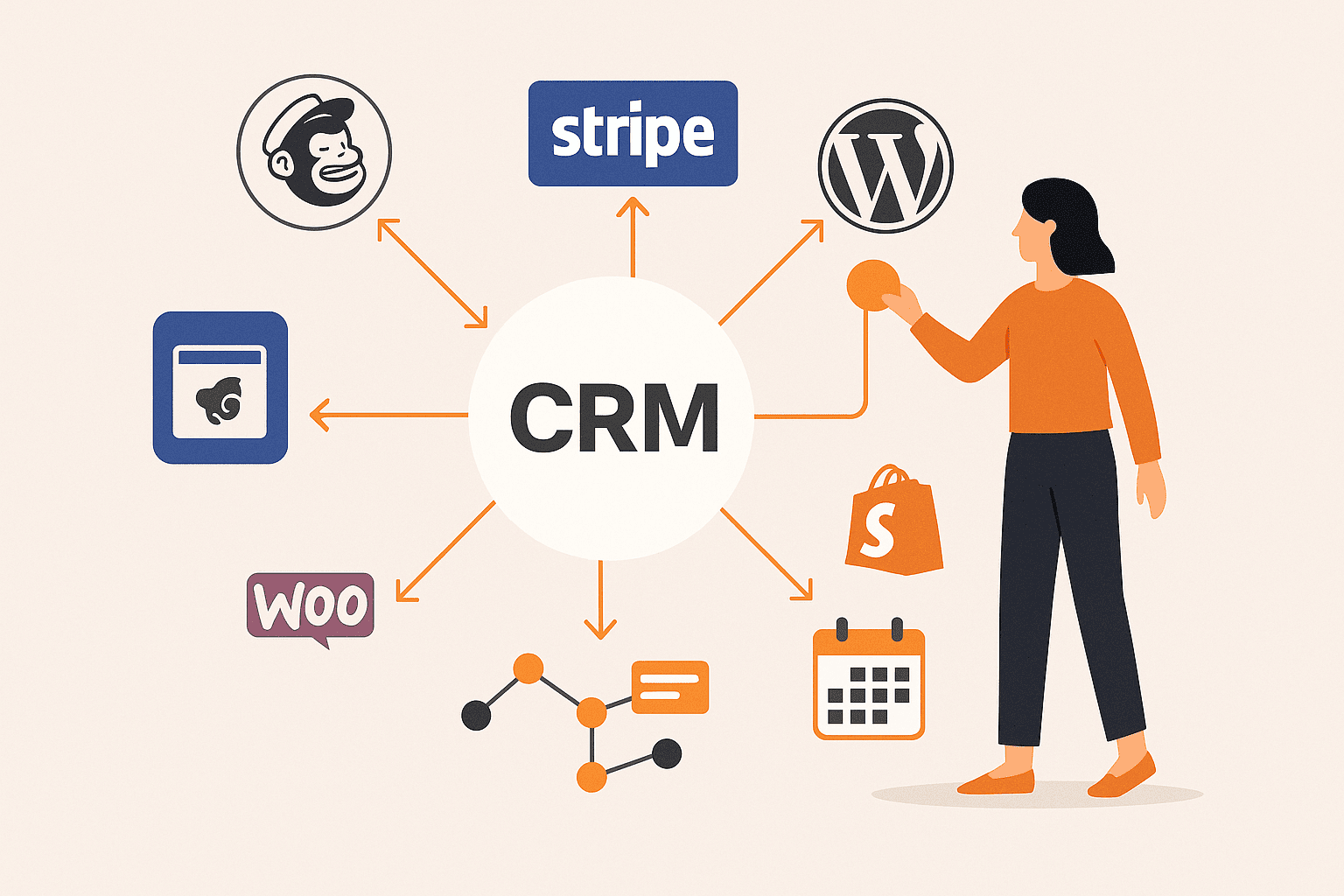
CRM systems have been shown to improve sales performance by 15–30% when teams are properly trained and processes are aligned, yet many organisations never reach that potential. This gap highlights the importance of CRM training for the sales team, especially for growing businesses that need consistent usage, confidence, and long-term adoption rather than more features.
Here are the reasons why CRM instructor is the best partner for growing your businesses:
Builds internal capability instead of external reliance, so teams can operate the CRM confidently without constant outside intervention
Establishes shared standards for how the CRM is used, reducing inconsistency across sales, marketing, and operations
Improves adoption through structured, role-based learning, which often becomes the deciding factor in how to choose the right CRM partner
Provides ongoing guidance as processes change, rather than treating CRM as a one-time setup project
Connects leadership intent with frontline execution, ensuring CRM data reflects reality and supports better decisions
The challenges didn’t show up as a single failure but as small signals that kept repeating. The CRM was in place, yet teams interacted with it differently, reports raised more questions than answers, and onboarding new hires felt harder than it should have. What became clear through this experience was the difference between CRM implementation vs CRM consultation, and why a CRM partner for growing businesses is often needed to bring consistency back into the system.
Those signals tended to look like this across the organization:
The CRM feels more complex or underused than expected
Teams follow different habits or avoid the system altogether
Reports fail to reflect what leaders see happening day to day
Scaling the team introduces more friction instead of clarity
CRM data exists, but it does not consistently support decisions
Adopting a CRM doesn’t automatically translate into growth if the system isn’t used consistently or aligned with how the business operates. Industry research shows that companies who use CRM effectively are up to 86% more likely to exceed sales targets, with many seeing revenue gains of 21–30%. These outcomes highlight the real difference that comes from getting CRM right, not just having it in place.
Take a look at how CRM partner drives your businesses growth:
Higher adoption and cleaner data, which reinforces why businesses need a CRM partner beyond the initial setup
Faster sales cycles and more reliable forecasting driven by consistent processes
Stronger alignment between teams across leadership, sales, and operations
Improved customer experience through better visibility and follow-through
A CRM that evolves with the business, often central to how to choose the right CRM partner
Conclusion
The company never changed its CRM. What changed was how the system was supported and taught inside the business. With clearer guidance and ongoing CRM training for the sales team, the CRM became part of daily work instead of something people worked around. That outcome reinforces a simple idea. Software alone does not drive growth. A CRM partner for growing businesses helps turn a CRM into a system teams trust and rely on over time. For businesses facing similar challenges, working with a CRM instructor can be a practical next step toward making CRM work the way it was intended.
Not Sure If Your CRM is Set Up to Support Your Growth?
CRMInstructors helps growing businesses design, optimise, and train teams to use CRM systems effectively.