
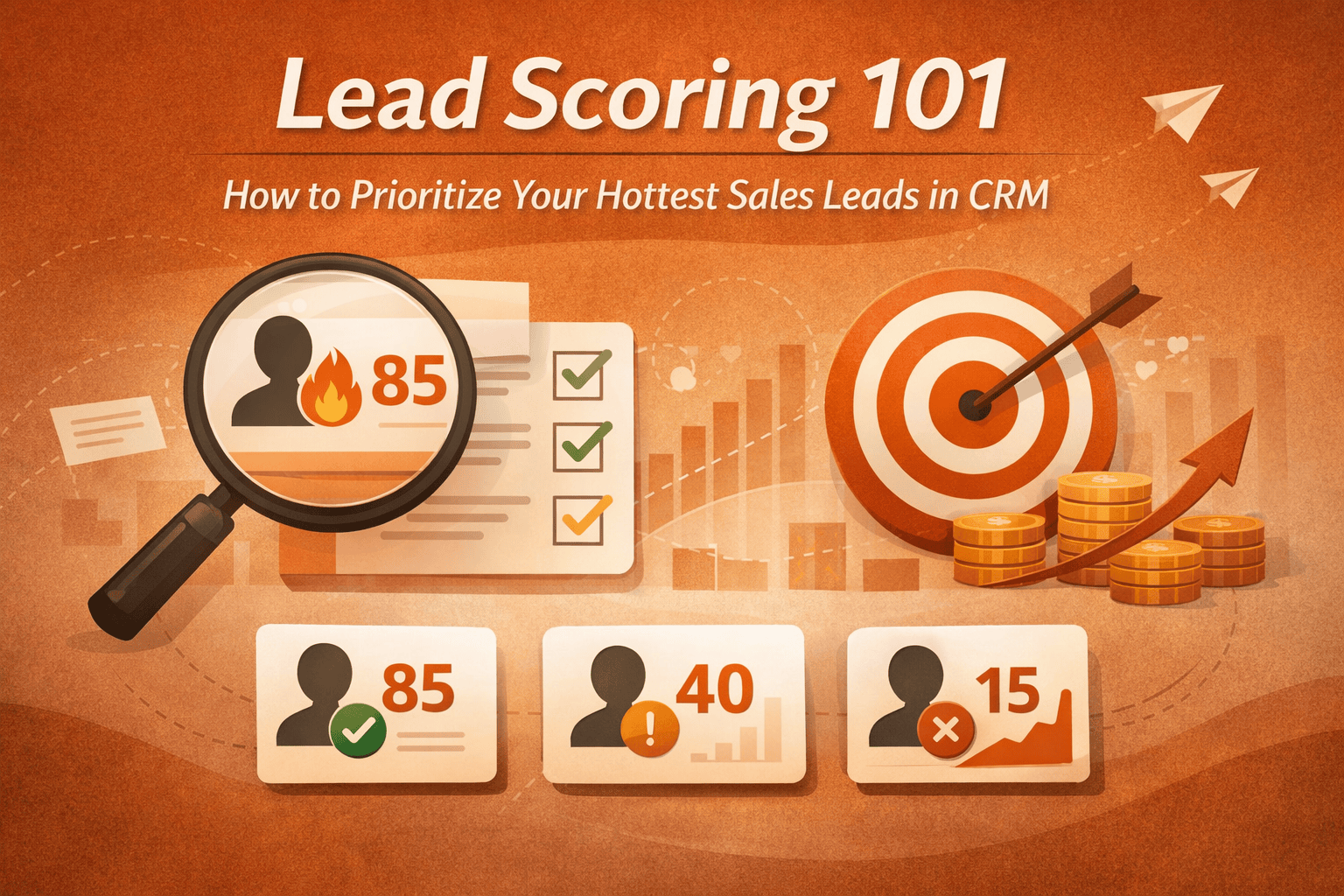
Ever feel like your sales team is juggling too many leads at once, unsure which ones are actually ready to buy? Chasing every contact the same way wastes time, energy, and opportunities. This is where lead scoring in CRM comes in. By giving each lead a clear value based on their actions and fit, you can quickly see who deserves your attention first.
In this beginner-friendly guide, we’ll walk you through how to prioritise sales leads so your team can focus on the hottest prospects, close deals faster, and stop wasting effort on leads that aren’t ready.
A lead scoring system for sales is a way to determine which leads are worth your attention. Instead of guessing, you can identify hot leads in CRM by giving points for things they do, like opening emails, visiting your website, or requesting a demo. The higher the score, the more likely they are to be ready.
Companies that use lead scoring well see much better results—about 138% ROI on lead generation compared to 78% for those who don’t. That means spending your time on the right leads really pays off.
In short, lead scoring helps you focus on the leads that matter, instead of wasting time on ones that aren’t ready.
Sales teams often struggle with too many leads at once. Some leads reply immediately, some never respond, and it’s easy to waste hours on prospects who aren’t ready. Using lead scoring in CRM helps sort this out. By assigning each lead a score based on their actions and how well they align with your ideal customer, teams can identify which prospects require the most attention first.
Companies that do this effectively report sales productivity increases of up to 30%, because reps spend time on leads that are most likely to convert instead of chasing every single contact.
1. Saves Time
Sales reps often get buried in long lists of leads, unsure which ones are worth contacting. Lead scoring highlights the most promising prospects, so reps spend their time where it counts. Instead of chasing uninterested contacts, they focus on leads that are ready to engage, making each day more productive and less stressful.
2. Improves Follow-Ups
After identifying the hottest leads, the process of follow-up became simpler. Rather than sending universal emails, it was now possible to craft emails that were relevant to each of the leads’ interests. A good lead qualification process ensures that no one is left behind, hence making the process of follow-up effortless.
3. Helps Sales Focus
Before lead scoring, reps often jumped between too many leads, losing track of what mattered. With the top prospects clear, the team could focus on leads most likely to convert, making their efforts sharper and more effective.
4. Reduces Lost Opportunities
Important leads used to slip through the cracks because the team didn’t know who to prioritise. Lead scoring helped them spot high-potential prospects early, making sure no opportunity was wasted.
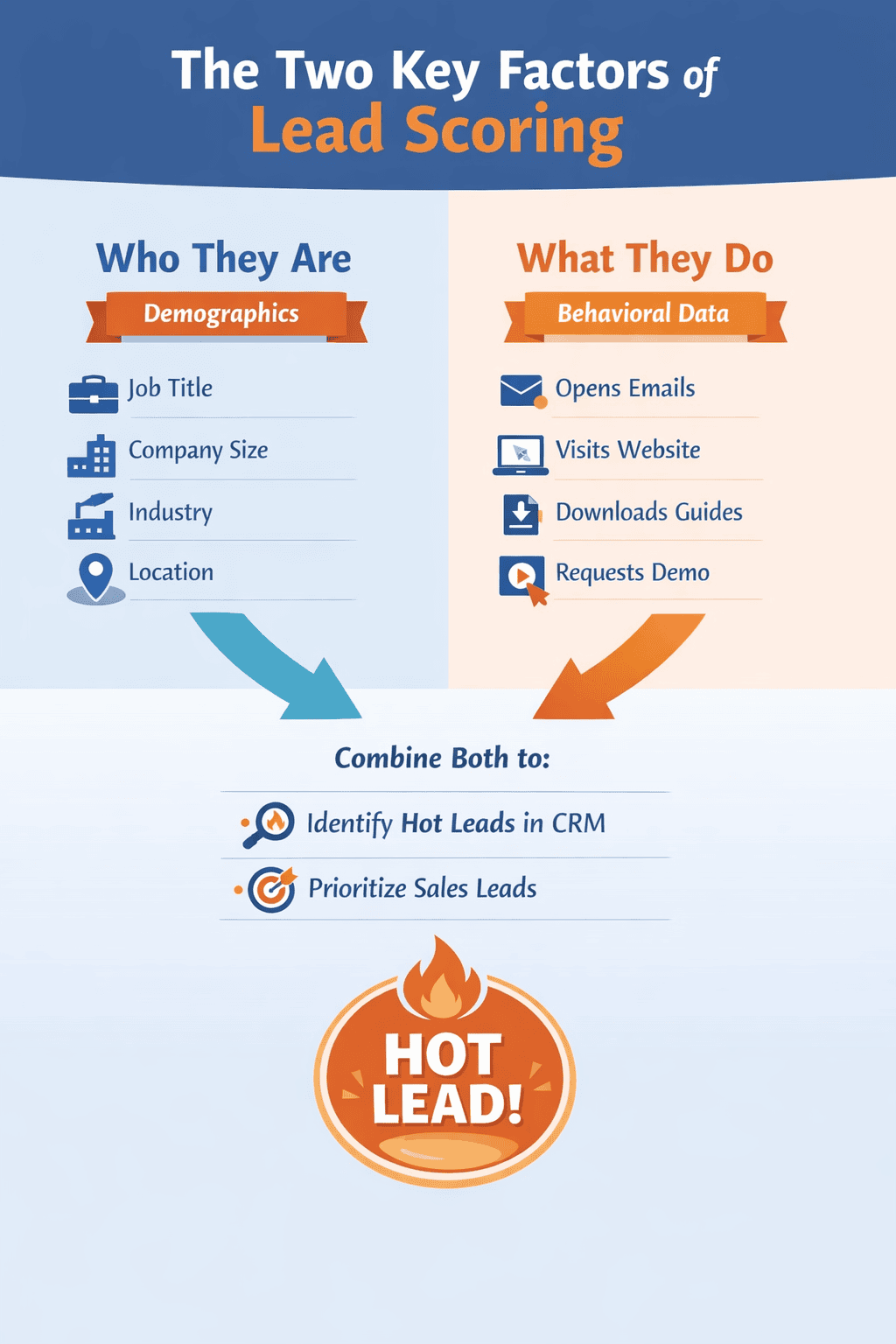
Lead scoring looks at two things: who a lead is and what they do. The “who” is basic info like job title, company size, industry, and location. The “what” is their actions, like opening emails, visiting your website, or requesting a demo. Using both together helps you identify hot leads in CRM and know how to prioritise sales leads so your team focuses on the leads most likely to convert.
Setting up a lead scoring system for sales helps your team quickly see which leads are most likely to convert and focus on what matters most.
1. Define Your Ideal Customer
Start by thinking about who usually buys from you. Look at details like job title, company size, industry, and location. Knowing this helps your team focus on leads that are a good fit and avoids wasting time on contacts who aren’t likely to convert.
2. Identify Key Actions
Track the behaviours that show real interest. This could be opening emails, visiting your website multiple times, downloading guides, or requesting a demo. The more a lead engages with your content, the higher their interest level.
3. Assign Points
Give each action a point value based on how important it is. High-intent actions, like requesting a demo, get more points than small actions, like opening an email. Over time, this makes it easy to see which leads are worth prioritising.
4. Set a Hot Lead Score
Decide what total score qualifies a lead as “hot.” For example, 70+ points could signal a lead is ready for a sales conversation. This threshold helps the team act quickly on the most promising prospects.
5. Keep it Realistic
Start simple and avoid overcomplicating the system. Track how well the scores match actual sales results, and adjust as you learn. A practical, realistic approach makes the lead scoring system useful rather than confusing.
Not all leads are ready to buy at the same time. Using lead scoring in CRM makes it easy to see who needs attention first.
Cold Leads
These leads show little interest and may not fit your ideal customer profile. For example, someone who signed up for a newsletter but hasn’t opened any emails. Handle them gently—keep them in nurturing campaigns and avoid spending too much sales time here.
WarmLeads
It shows some engagement and could be a good fit. Someone who downloaded a guide or visited your pricing page once fits here. Following a solid sales lead qualification process helps you nurture these leads with timely content until they’re ready.
HotLeads
These are the leads you want to act on immediately. They requested a demo, visited your pricing page multiple times, or responded to emails. Assign them to sales right away—they’re ready to convert.
Breaking leads into Cold, Warm, and Hot makes it easy to prioritise and follow up effectively, focusing on the prospects most likely to convert.
More than half of B2B sales teams report challenges with lead scoring, which makes understanding how to prioritise sales leads essential to avoid wasted time and missed deals.
1. Over-Scoring Everyone
Some teams give high scores to nearly every lead, thinking it’s safer. The problem is that it hides the truly promising leads and overwhelms the sales team. A lead scoring system works best when points reflect real interest and fit. That way, your team can quickly spot who to focus on and avoid wasting time on leads that aren’t ready.
2. Ignoring Negative Behaviour
Leads that show little or no interest can be just as telling as active ones. A lead scoring system for sales should account for negative behaviors to focus on the leads most likely to convert.
3. Never Reviewing Scores
Lead scores aren’t set in stone and can change over time as leads engage or lose interest. Regularly reviewing and updating scores ensures your team focuses on the most promising prospects and doesn’t miss opportunities.
4. Poor Sales-Marketing Alignment
If sales and marketing aren’t on the same page, leads can be misclassified or mishandled. Aligning both teams ensures the right leads get the right attention at the right time.
5. Using Guesswork Instead of Data
Relying on intuition instead of tracking lead behaviour can lead to wasted time and missed opportunities. Using real data ensures your team focuses on leads most likely to convert.
Conclusion
A well-planned lead scoring in a CRM system helps your team focus on the prospects most likely to convert, saving time and effort. By understanding how to prioritize sales leads, you can quickly identify hot opportunities, follow up effectively, and turn more leads into loyal customers. Starting simple, reviewing your scores, and learning from real interactions ensures your lead scoring strategy stays practical and effective.
Ready to Focus on The Right Leads?
See where your lead scoring is helping, where it’s slowing you down, and how to optimise your CRM for better results.